
Building your own home is one of the most exciting things a family can do. You get to shape every room around how you actually live instead of settling for someone else’s choices. But before the fun part, almost everyone lands on the same question: what is this going to cost me?
It’s a fair question, and you deserve a straight answer, not a vague “it depends” that leaves you guessing. So here’s an honest look at what it costs to build a custom home in Texas in 2026, what those numbers actually include, and how to plan a budget you can trust from the first day to the final walkthrough.
The Short Answer: Cost Per Square Foot in 2026
Across the Dallas-Fort Worth area, including Rockwall, Fate, and Royse City, custom home construction in 2026 generally runs between $200 and $400 per square foot for the build itself, with high-end projects climbing past $500.
Here’s a rough way to think about the tiers:
- Entry-level custom: roughly $190–$260 per square foot
- Mid-range custom: roughly $260–$380 per square foot
- High-end custom: $380 per square foot and up, sometimes well past $600
To put that in perspective, a 2,500-square-foot home at a mid-range finish level often lands somewhere between $650,000 and $950,000 to build, before land. It’s a wide range on purpose, because the finish level and design choices you make can swing the final number dramatically.
Why “Cost Per Square Foot” Only Tells Part of the Story
Cost per square foot is a useful starting point, but it’s a starting point, not a quote. Two homes of the same size can differ by hundreds of thousands of dollars depending on what goes into them.
Think about it this way: a straightforward single-story home with a simple roofline costs far less per square foot than a two-story home with vaulted ceilings, a chef’s kitchen, and a spa-style primary bath. The square footage is only counting floor space. It says nothing about the cabinets, the countertops, the windows, or the craftsmanship holding it all together.
That’s why we never hand a family a per-square-foot figure and call it an estimate. Real numbers come from real plans.
What Actually Goes Into the Price of a Custom Home
When you see a total build cost, you’re really looking at several buckets stacked together. Understanding them helps you see where your money goes, and where you have room to make choices.
Land and site preparation. Your per-square-foot build price rarely includes the lot. On top of the land itself, you may need clearing, grading, a driveway, and utility connections. In parts of North Texas, expansive clay soil can also mean a more engineered foundation, which affects cost.
Design and engineering. Custom means designed for you. Architectural plans, structural engineering, and any special design work are part of the investment, and they’re what separate a true custom home from a stock floor plan.
Permits and fees. These vary by city. In the outer Dallas suburbs like Rockwall County, permit and impact fees commonly run in the range of $6,000 to $14,000, lower than in the core cities but still a real line item you’ll want budgeted from the start.
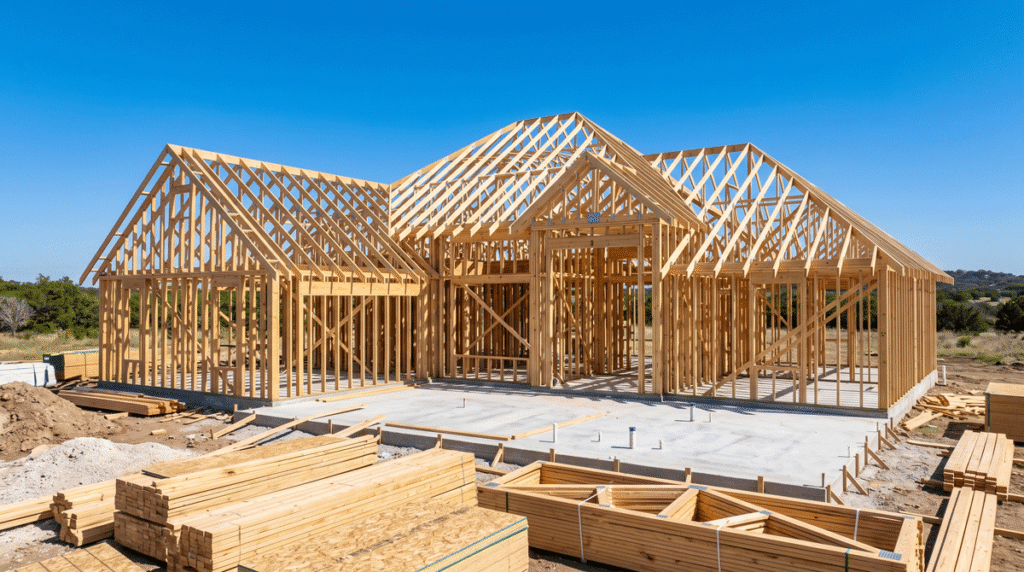
The build itself. Foundation, framing, roofing, plumbing, electrical, HVAC, insulation, drywall- this is the structural heart of your home, and it’s where quality materials and skilled labor matter most.
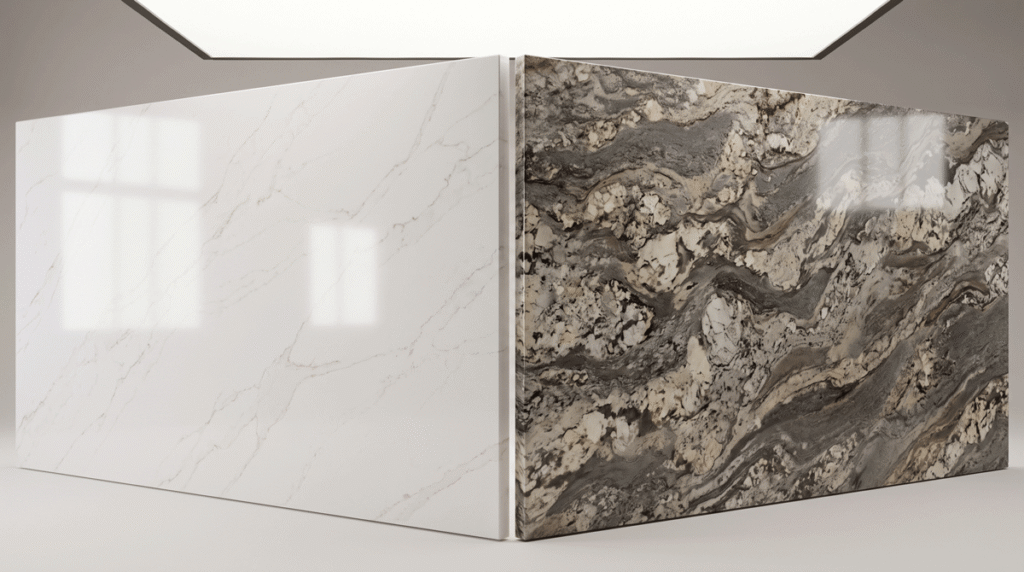
Finishes and fixtures. This is where budgets move the most. Your kitchen and bathrooms alone can account for a huge share of your finish budget, depending on the cabinetry, countertops, tile, and fixtures you choose. Flooring, trim, lighting, and paint all add up too.
Soft costs and contingency. Smart budgets set aside a cushion, typically 5 to 10 percent, for the unexpected. A good builder plans for it so surprises don’t derail you.
The Factors That Move Your Number the Most
If you’re trying to understand why one project costs more than another, these are the levers that matter:
Finish level: The single biggest variable. Standard, mid-grade, and luxury finishes can double the cost of the same room.
Design complexity: Simple, efficient layouts cost less than dramatic angles, high ceilings, and custom millwork. Every custom feature is worth it if you love it, but each one has a price.
Site conditions. A flat, cleared lot with utilities at the street is far cheaper to build on than a sloped or wooded lot that needs significant prep.
The market: Material and labor prices shift over time. Building relationships with reliable suppliers and crews, which comes with experience, helps keep pricing steady and predictable.
Is It Better to Build, Buy, or Renovate?
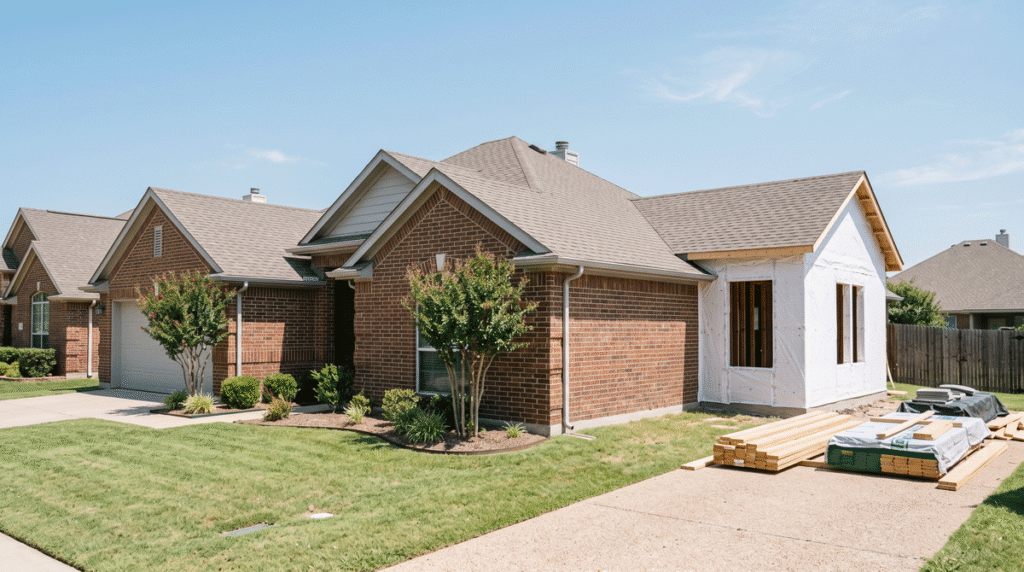
Building isn’t always the right call for every family, and we’ll tell you that honestly. If you love your neighborhood and mostly need more space or updated rooms, a home renovation or a home addition can get you most of what you want for a fraction of a full build.
But when you want a home shaped entirely around your family, built new with premium materials and no compromises inherited from a previous owner, custom home building is hard to beat. You control the layout, the quality, and the finishes, and you start with zero deferred maintenance. For a lot of families, that peace of mind is worth every dollar.
How to Budget Without Nasty Surprises
The horror stories you’ve heard about home projects- the surprise charges, the ballooning costs, the “we’ll figure it out later”- almost always trace back to a vague budget and a builder who wasn’t upfront.
We do it differently. Before work begins, you get a detailed, itemized estimate so you know exactly what you’re paying for. No mystery line items, no surprise change orders halfway through the build. And because a dedicated project manager oversees every stage through our project management process, materials, scheduling, permits, and quality checks all stay coordinated, so the budget you agreed to is the budget you actually pay.
Building a Custom Home in Rockwall, Fate & Royse City With Stewart Concepts
We’ve spent more than 30 years building and renovating homes across the Rockwall area. We’re not a franchise, and we’re not a side operation; this is our craft, and it’s local. When you build with us, you work directly with a team that knows North Texas soil, North Texas permitting, and how to deliver a home that stands the test of time.
Every project is backed by honest, upfront pricing, reliable timelines you can plan around, and the Good Contractors Guarantee- real financial protection, not just a handshake. From the first sketch to the final walkthrough, you’ll always know exactly what’s happening with your project and your money.
Ready to Put Real Numbers to Your Dream Home?
The best way to find out what your custom home will cost is to stop guessing and start planning. Please tell us what you’re imagining, your lot, your must-haves, your budget, and we’ll give you honest answers and a clear, itemized estimate. No pressure, no obligation.
Call us at (972) 345-2141 or request your free estimate today, and let’s talk about what’s possible.
Frequently Asked Questions
How much does it cost to build a custom home in Texas in 2026?
In the Dallas-Fort Worth area, including Rockwall and Fate, custom builds generally run about $200 to $400 per square foot for construction, with luxury projects going higher. Your final cost depends on size, finish level, design, and site conditions, which is why an itemized estimate is the only way to know your real number.
Does the price per square foot include the land?
No. Per-square-foot pricing covers the construction of the home itself. Land, site preparation, driveways, utility connections, and permits are separate costs you’ll want budgeted from the start.
Is it cheaper to build or buy a house in the Rockwall area?
It depends on the market and what you want. Buying an existing home can be faster and sometimes cheaper up front, but building lets you get exactly the layout, quality, and finishes you want with no inherited repairs. We’re happy to walk you through the trade-offs honestly.
How long does it take to build a custom home?
Most custom homes take several months to a year from design through final inspection, depending on size and complexity. We provide a detailed timeline before construction begins so you always know what to expect and when.