
Few decisions shape the look and feel of a remodel more than your countertops. They’re the surface you touch every single day, the backdrop for your morning coffee, and often the first thing a guest notices when they walk into your kitchen. So it’s no surprise that the question we hear most during a remodel is: quartz or granite?
Here’s the honest answer up front: both are excellent. There’s no wrong choice between them. The right one depends on how you live, what you love, and how much upkeep you want to sign up for. Let’s break down what actually separates the two so you can choose with confidence.
Quartz Countertops: The Basics
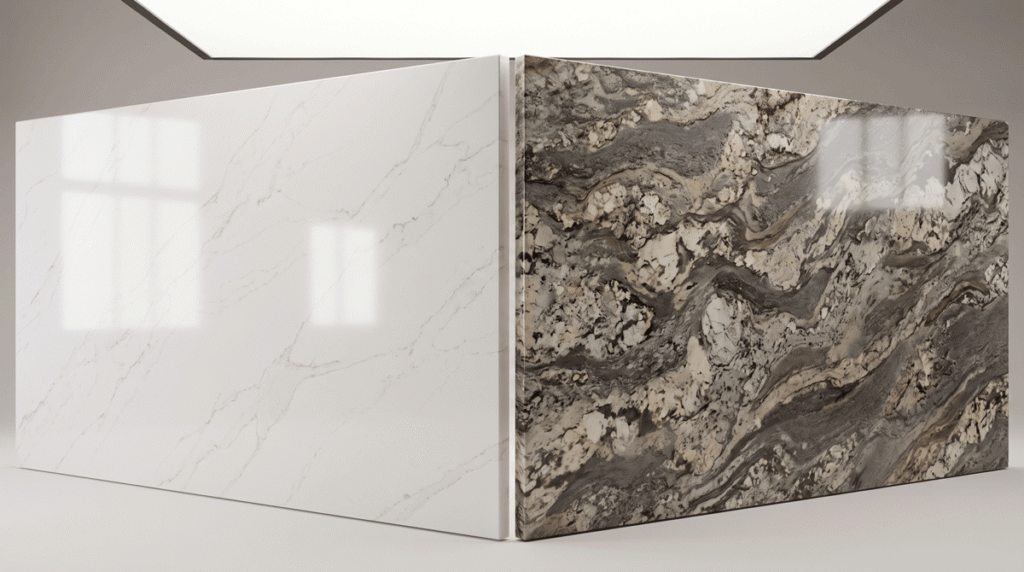
Quartz is an engineered stone. It’s made by combining ground natural quartz, one of the hardest minerals on earth, with resins and pigments, then forming it into slabs. Because it’s manufactured, quartz offers something natural stone can’t: consistency and design control.
That process gives quartz two standout traits. It’s non-porous, meaning it never needs sealing and won’t absorb spills or harbor bacteria. And it comes in a huge range of colors and patterns, including convincing marble looks, with far more predictability from slab to slab.
Granite Countertops: The Basics
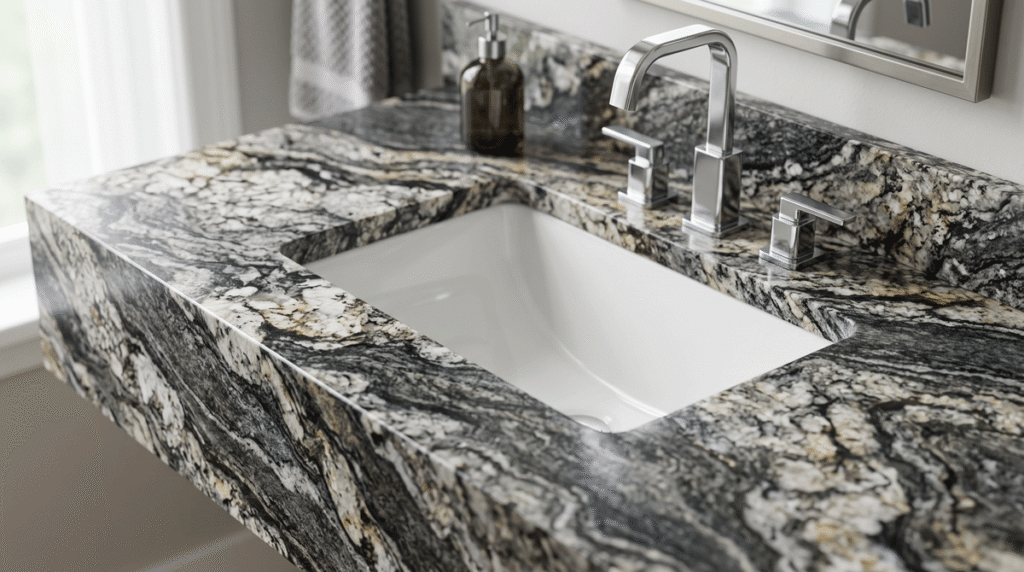
Granite is 100 percent natural stone, quarried in slabs and cut to fit your space. No two pieces are exactly alike, which is precisely why so many homeowners fall in love with it. The depth, movement, and one-of-a-kind veining give a kitchen or bath a richness that’s hard to replicate.
Because it’s a natural material, granite is porous and needs to be sealed periodically to resist stains and moisture. In exchange, you get a surface with genuine character and exceptional heat resistance.
Head-to-Head: How They Compare
The best way to choose is to weigh the two against the factors that matter most in daily life.
Appearance and Style
If you want a unique, natural look with organic variation, granite wins; every slab is truly one of a kind. If you want a specific color, a consistent pattern across a large island, or a clean modern look (including marble-style veining without the fragility of real marble), quartz gives you far more control. This often comes down to personal taste: natural character versus curated consistency.
Durability and Strength
Both are extremely durable and stand up to years of heavy use. Quartz is slightly more flexible and less prone to chipping at the edges, while granite is exceptionally hard but can occasionally chip if something heavy strikes a corner. For everyday scratches and dents, both perform beautifully.
Heat Resistance
This is where granite has a real edge. As natural stone, it handles hot pots and pans better than quartz. Quartz can be scorched or discolored by direct high heat because of the resins that bind it, so trivets and hot pads are a must. If you’re a serious cook who sets pans straight down, that’s worth weighing.
Maintenance and Cleaning
Quartz is the low-maintenance champion. Because it’s non-porous, it never needs sealing, and everyday cleanup is as simple as soap and water. Granite needs to be resealed periodically and cleaned with stone-safe products to avoid dulling the finish. Neither is difficult, but quartz asks less of you over time.
Cost
The cost is more similar than most people expect. Both quartz and granite are mid-to-premium investments, and the price of each varies widely depending on the specific color, slab, thickness, and edge detail you choose. A rare granite slab can cost more than standard quartz, and a designer quartz can cost more than common granite. In practice, budget rarely decides for you; taste and lifestyle usually do.
Resale Value
Here, it’s a tie in the best way. Both quartz and granite are viewed as premium upgrades by buyers, and either one signals a quality kitchen or bath. You won’t go wrong on resale with a well-installed surface in either material.
Which Is Better for a Kitchen?
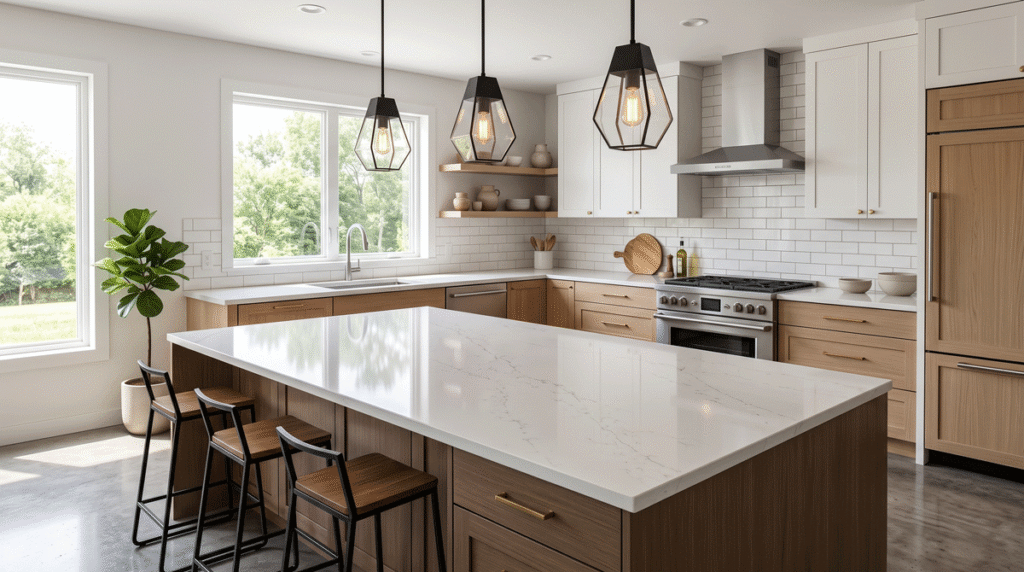
For a busy family kitchen, both shine, but the tiebreaker is usually lifestyle. If you want a worry-free surface that never needs sealing and wipes clean in seconds, quartz is hard to beat, especially on a large island where consistent color really pays off. If you cook with a lot of heat and love the look of natural stone, granite’s heat resistance and character make it a favorite. Either way, the finish and layout matter as much as the material, which is why professional design and installation are so important.
Which Is Better for a Bathroom?
In a bathroom, quartz often has the advantage. Its non-porous surface resists moisture, makeup, and toothpaste stains without any sealing, which suits a room that stays humid. That said, granite is still a gorgeous, durable choice for a vanity, and in a powder room where a striking natural slab can be the star, it’s a beautiful pick. Both hold up well to the daily demands of a bathroom.
So, Which Should You Choose?
If we had to boil it down: choose quartz if you want low maintenance, a consistent and highly customizable look, and a surface you never have to think about. Choose granite if you love natural, one-of-a-kind stone, cook with serious heat, or want each slab to feel unique to your home.
There’s no universally “better” option, only the one that fits your priorities. The real key to a countertop you’ll love for decades is choosing the right slab for your space and having it templated and installed correctly, and that’s where an experienced team makes all the difference.
Designing Your Countertops With Stewart Concepts
Picking a material is just the start. Getting a countertop that looks flawless and lasts comes down to precise measurement, careful slab selection, expert fabrication, and a clean install that fits your cabinets and layout perfectly.
For more than 30 years, we’ve helped homeowners across Rockwall, Fate, and Royse City choose finishes that fit the way they actually live, then built them to last. Whether it’s a single kitchen or bath remodel, a whole-home renovation, or a custom home built from the ground up, we guide you through material and design choices with honest advice, give you a detailed, itemized estimate before any work begins, and back the result with the Good Contractors Guarantee.
Ready to Find the Perfect Countertop?
Still torn between quartz and granite? The easiest way to decide is to see the options in the context of your real space and budget. Tell us what you’re planning, and we’ll help you weigh the trade-offs and land on a surface you’ll love for years.
Call us at (972) 345-2141 or request your free estimate today, and let’s design a kitchen or bath that fits your life.
Frequently Asked Questions
Is quartz or granite more durable?
Both are highly durable and stand up to daily use for decades. Quartz is a bit more resistant to chipping, while granite handles high heat better. For scratches and everyday wear, they perform about equally; the difference is in how they respond to heat and edge impacts.
Which is more expensive, quartz or granite?
Their price ranges overlap heavily. Both are mid-to-premium surfaces, and the final cost depends more on the specific slab, color, thickness, and edge you choose than on the material itself. A premium granite can cost more than standard quartz, and vice versa.
Does granite need to be sealed?
Yes. Because granite is a natural, porous stone, it should be sealed periodically to keep resisting stains and moisture. Quartz is non-porous and never needs sealing, which makes it the lower-maintenance option of the two.
Can I put hot pans directly on quartz?
It’s best not to. The resins in quartz can scorch or discolor under direct high heat, so always use trivets or hot pads. Granite is more forgiving with hot cookware, but protecting any countertop from direct heat helps it last longer.